Chinese Hickory vs Pecans and Walnuts: A Practical Comparison
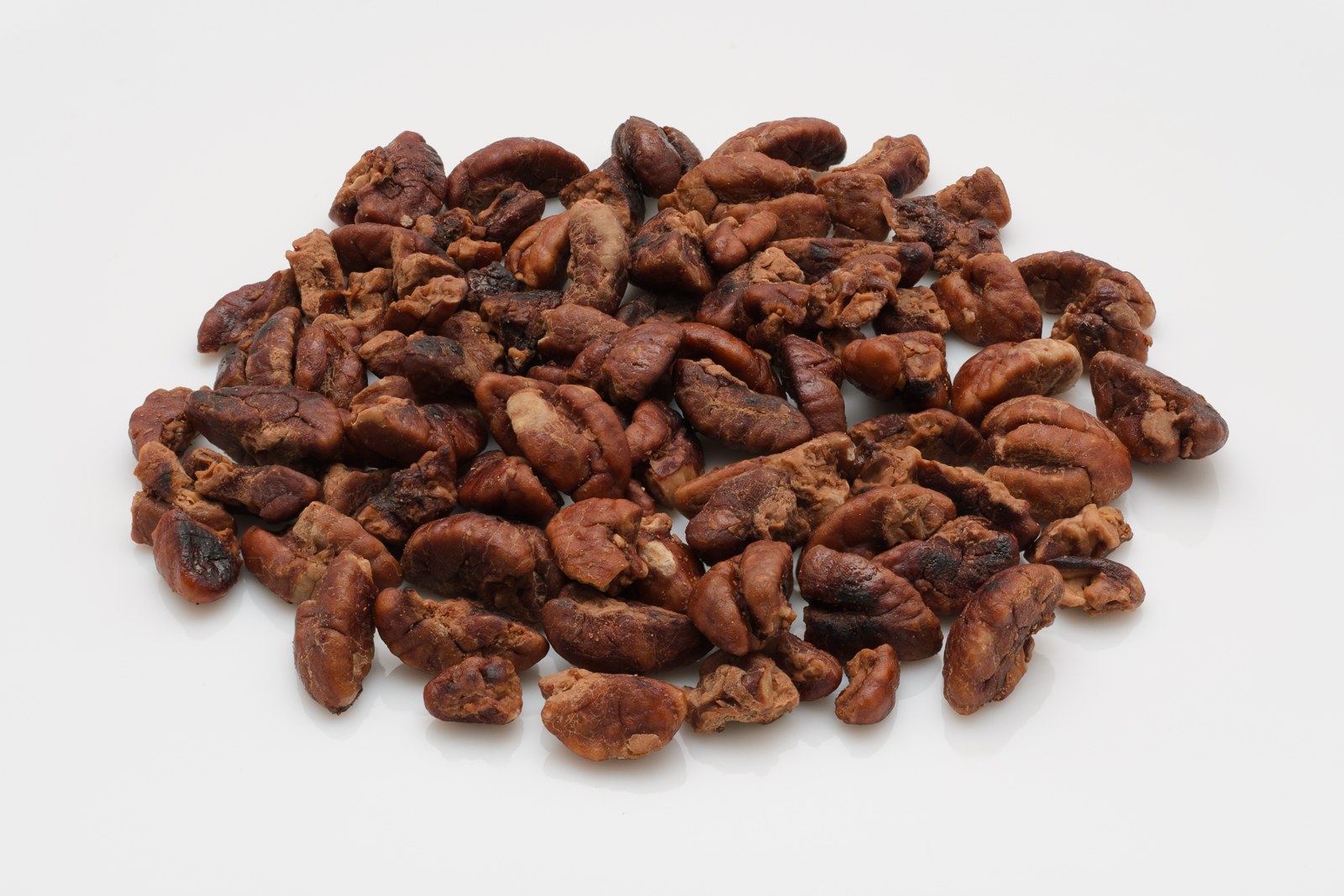
Featured photograph: Chinese hickory kernels. Photo: King of Hearts / Wikimedia Commons / CC BY-SA 4.0. Resized for web. The photographs illustrate nut types, not products we have tested.

Chinese hickory, pecans and walnuts differ in their shells, kernel shapes and the ways they are sold. Start with the job you want the nuts to do. Are you opening shells for a snack, looking for neat halves to decorate a cake, or choosing kernels to scatter over a salad? The species matters, but the shell format, seasoning and size of the pieces can matter just as much.
This is a source-based buying and cooking comparison, not a hands-on tasting or substitution trial. Here, “walnut” means the common English or Persian walnut, Juglans regia, rather than black walnut or every other walnut species.
At a glance: identity and practical choice
- Chinese hickory: Carya cathayensis, known as 山核桃 (shanhetao). The USDA's taxonomic record lists the nuts and their oil as food uses. Small, hard shells make shelled kernels a useful choice when you want less preparation.
- Pecan: Carya illinoinensis. It belongs to the same genus as Chinese hickory, but is a different species. NC State Extension's pecan profile describes its edible nuts and the variation among cultivars. For the familiar elongated shape as a visible topping, choose intact halves rather than pieces.
- Common walnut: Juglans regia. It belongs to the same family, Juglandaceae, but a different genus. NC State's walnut profile includes the familiar English and Persian names. Its rounder nut has a wrinkled shell; buying kernels avoids shell removal. Choose halves or pieces to suit the dish.
Shared family membership does not make these three names interchangeable on a recipe or ingredient label. For the regional background, see our introduction to Chinese hickory and Lin'an. Our separate guide to the 2019 genome study covers the science of their relationship.
Shells and shapes: what changes the preparation work?
Chinese hickory has a small, hard shell. A 2022 Zhejiang University study on shell-fragment detection describes it as smaller and harder-shelled than pecan, with shell and kernel separation posing a processing challenge.
For the cook, the practical consequence is straightforward: buying shelled Chinese hickory kernels avoids the extraction stage. Hand-cracked or hand-peelable nuts still have shells to remove. Check kernels for remaining shell pieces before serving them or adding them to food. Our opening and eating guide explains the formats in more detail.
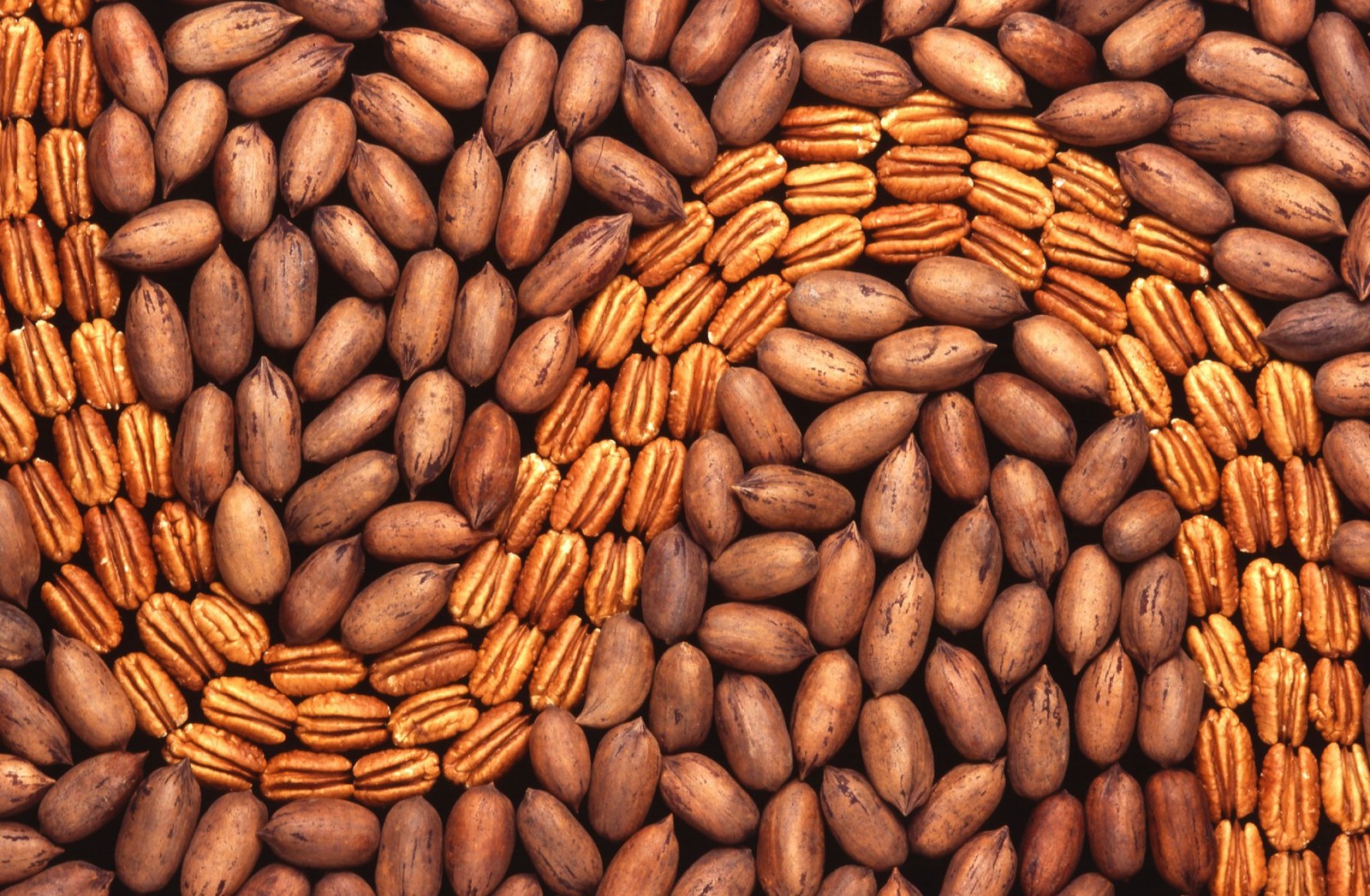
Pecans often have an elongated outline. The shell and kernel halves in the photograph below show that familiar form. Size, shape and shell thickness vary with cultivar; “pecan” is not a promise of one exact grade. When appearance matters, buy halves rather than assuming a bag of pieces will provide them.

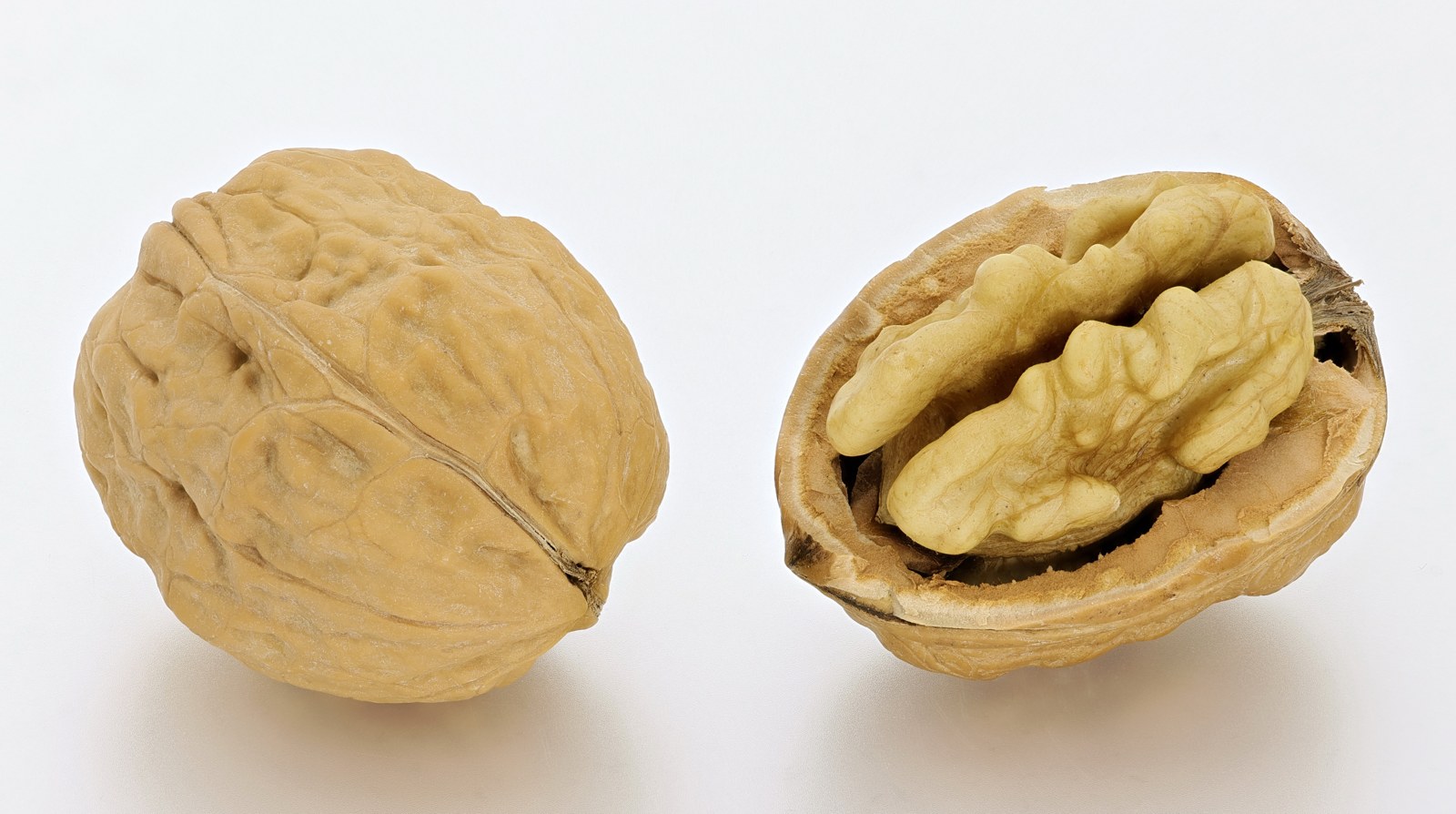
Common walnuts have a rounder, wrinkled shell. NC State describes the nut inside a green husk and its wrinkled shell. The green outer covering, the hard shell and the edible kernel are different things. For kitchen shopping, “shelled walnut halves” tells you more about the usable format than a photograph of fruit on a tree.

Flavor descriptions are clues, not a tasting result
The Royal Horticultural Society describes Chinese hickory nuts as sweet and notes their use in Chinese sweets and snacks. NC State also describes pecans as sweet. Neither description establishes which nut you will find sweeter, richer or more appealing.
For walnuts, California Walnuts' culinary guidance discusses astringency associated with the thin skin around the kernel. It helps explain why a walnut can bring an edge to a dish without justifying the claim that every walnut is bitter.
A sweetened, roasted Chinese hickory snack and a plain walnut are also different preparations. Comparing them does not isolate the flavor of the species. If you want to explore the difference yourself, choose plain products prepared as similarly as possible, and compare them in small amounts.
Choose the format for the dish
For a snack
Choose in-shell or hand-cracked nuts if opening them is part of what you want. Choose ready-to-eat kernels if convenience matters more. Check preparation directions: shell removal alone does not tell you whether a product is ready to eat. A seasoned product can be a deliberate snack choice, but its salt, sugar or flavoring comes with it.
For salads, porridge and simple toppings
Plain, ready-to-eat kernels give you more control over the seasoning. Pieces can suit a scattered topping; halves can suit a more deliberate arrangement. A small amount of Chinese hickory, pecan or walnut can be an experiment in a flexible dish.
For cakes, biscuits and other baking
Use the nut and preparation specified by the recipe when you need a predictable result. Intact halves, chopped pieces and finely ground nuts serve different purposes. A sugar-coated snack is not equivalent to plain kernels, and a salty product may change the balance of the finished dish.
There is no universal, tested one-for-one substitution offered here. If you choose to experiment, start with a small batch and record the nut, its preparation and the quantity you used. Weigh edible kernels, not in-shell nuts, when a recipe calls for shelled nuts.
Compare the packet before comparing the species
- Confirm the identity. Check the nut name, not just a generic English translation or a flavor claim.
- Match the format. Compare kernels with kernels, and note whether the pack contains halves, pieces or nuts still in shells.
- Read the ingredients. Plain, salted and sweetened versions answer different needs. For Chinese wording and real label examples, use our Chinese hickory buying guide.
- Check the amount you can use. In-shell pack weight includes shells. Follow the product's storage directions and any instructions after opening.
- Keep nutrition comparisons like for like. Use the same edible serving weight and comparable preparation. Do not use pecan data as a stand-in for Chinese hickory. Our nutrition guide explains the evidence limits.
If you have a nut allergy, do not treat a different nut species as an automatically safe substitute. Check the ingredients and allergen information, and ask your allergy clinician about suitability. The NSW Food Authority advises checking labels each time because ingredients can change.
The practical choice: start with the recipe or eating occasion, then choose a clearly identified nut in the right format. Chinese hickory offers a distinct species and food tradition to explore; pecans and walnuts remain their own ingredients. A useful comparison helps you choose deliberately without pretending that one is always better, healthier or interchangeable with the others.