Chinese Hickory Nuts: Reading Labels and Choosing What to Buy
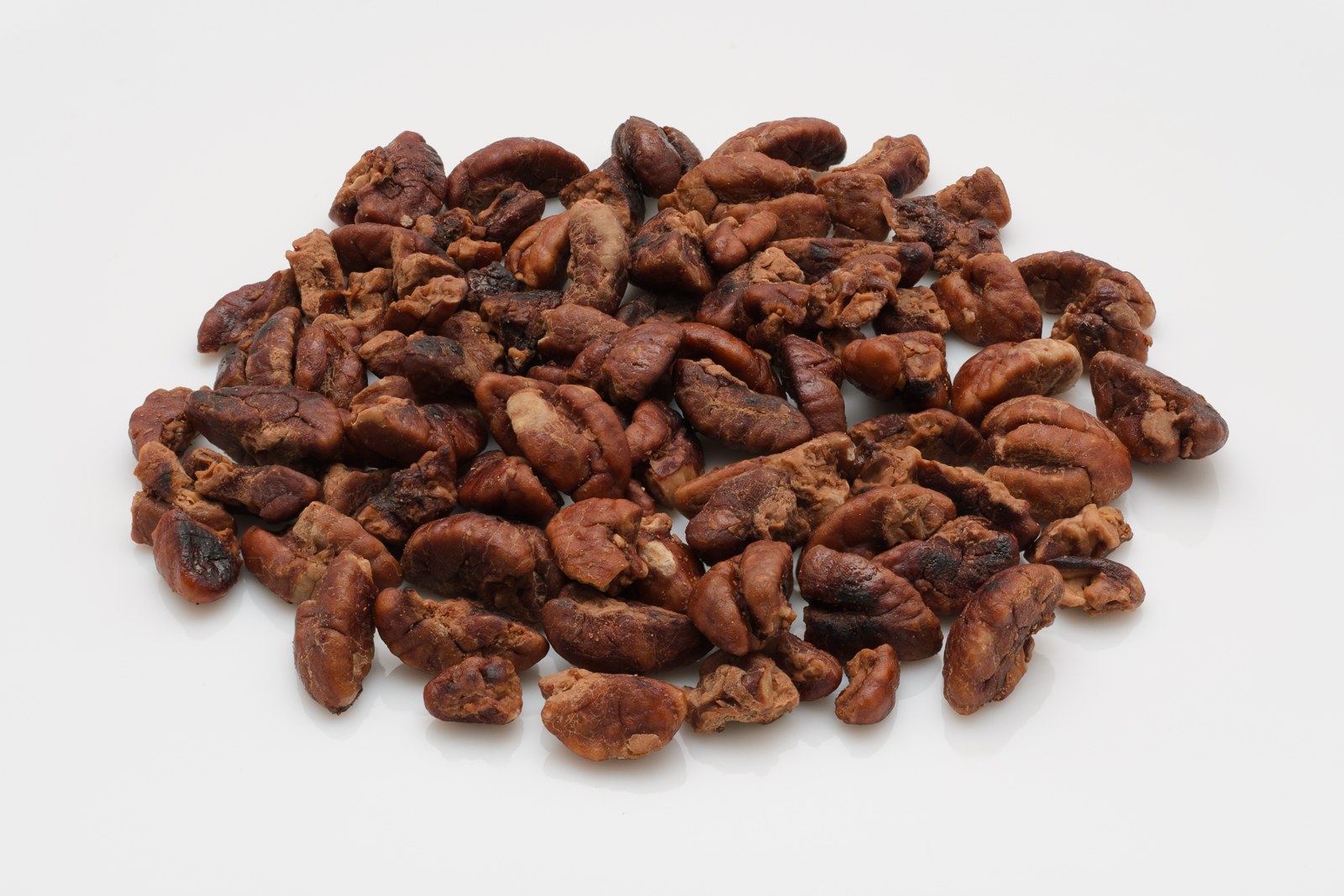
Chinese hickory kernels, shown for identification of the food format, not as a reviewed retail product. Photo: King of Hearts / Wikimedia Commons / CC BY-SA 4.0. Resized for web.

A useful Chinese hickory buying guide starts with the back of the packet. Check the nut's name, whether the shells are included, the full ingredient list and the date wording before comparing prices. A familiar-looking bag or a flavor called “original” does not answer all four questions.
This is a desk-researched guide to label reading, not a tasting test or a ranking of sellers. The retail examples below were checked on 2 November 2026. Listings and recipes can change; check the package you will actually receive.
Start with the Chinese name, not just the English translation
Chinese hickory is Carya cathayensis, known as 山核桃 (shanhetao). It is a different species from pecan and from the familiar walnut. Our Chinese hickory introduction explains that distinction. When a shop's English title is vague, compare it with the Chinese product name and ask the seller to identify the nut.
- 山核桃 (shanhetao): Chinese hickory in this food context. Look beyond a generic English “walnut” or “pecan” translation.
- 山核桃仁: Chinese hickory kernels. The final character, 仁, means the kernel; this is the format to look for when you want nuts without shells.
- 手剥山核桃: hand-peelable Chinese hickory. These are not the same as loose kernels: expect shells that still need removing.
- 临安: Lin'an, a place name. Check the stated origin separately rather than treating a prominent place name as complete proof of provenance.
- 原味 / 原香味: original flavor / original aroma flavor. Treat these as flavor descriptions, not promises that the ingredients contain only nuts.
- 奶油味 / 奶香味: cream flavor / milky-aroma flavor. Read the ingredients and allergen information; the name alone cannot establish whether milk is present or absent.
Find the fields that answer your buying questions
Use this short glossary to locate information, not as a substitute for a complete translation of a particular pack.
- 配料表 — ingredients: read the whole list, including coatings and seasonings. 白砂糖 is white sugar; 食用盐 is edible salt.
- 净含量 — net quantity: check grams and the number of bags or tins. For an in-shell product, the contents include shells; do not treat that weight as a weight of edible kernels.
- 生产日期 — production date: this is not automatically an expiry date, and it does not establish the harvest date.
- 保质期 — shelf life: read it together with the production date and stated storage conditions. Check whether the package instead gives a separate best-before or use-by date.
- 贮存条件 / 储存条件 — storage conditions: look for separate directions after opening.
- 产地 — origin; 生产商 — producer: distinguish where the nuts are said to come from from the address of the business making or packing the product.
If the date field says to look elsewhere on the pack, find that printed date before buying. A photo of the front label alone will not answer the question. A recent packing date is not evidence of a recent harvest.
A real listing: kernels can still contain sugar and salt
The Chinese listing for Lian Feng Hickory Nut Kernels, 108 g, on Weee! gives the ingredients as “小核桃、食用盐、白砂糖”: the nuts, edible salt and white sugar. This is the retailer's ingredient transcription, not our inspection of a purchased package.
The useful lesson is specific: “kernels” describes the removal of shells, not the absence of seasoning. If you want a single-ingredient product for cooking, this ingredient list would not meet that requirement. If you want a seasoned snack, it may be the type of product you meant to buy. We have not tested its taste, freshness or quality.
A second example: “hickory flavor” may describe a seed snack
Read the words after the flavor name as well. ChaCha’s Pecan Flavor Sunflower Seeds are described by the brand as roasted and salted sunflower seeds with pecan flavor. The Tak Shing Hong listing for a 160 g pack pairs 山核桃味瓜子 with the English name “CHACHA Roasted Sunflower Seeds Chinese Pecan Flavor.” These are seed snacks, not a bag of Chinese hickory kernels.
On Chinese labels, 味 means flavor and 瓜子 refers to seeds in this snack context. A name such as 山核桃味瓜子 therefore needs to be read as a whole. The flavor wording does not tell you whether actual nuts are ingredients, so it is not evidence that the snack is nut-free.
Compare like with like before judging value
Choose your format first. Kernels avoid the work of opening shells and are easier to weigh for a recipe. In-shell or hand-peelable nuts suit someone who wants to open each nut. For opening instructions rather than shopping decisions, use our guide to eating Chinese hickory nuts.
Next compare packs with the same format and preparation. Divide the price by the net weight in grams, then multiply by 100 to get a price per 100 g. For example, a hypothetical 200 g bag costing 12 currency units costs 6 per 100 g. This is an arithmetic example, not a current offer.
Do not use that figure to claim that a 200 g in-shell bag gives the same amount of food as 200 g of kernels. Without a measured edible yield, you cannot calculate an accurate kernel-price comparison. Also check whether a multipack's advertised weight is the total or the weight of each inner packet.
For a first purchase, choose an amount you expect to use within the product's stated storage guidance. A lower unit price is not useful if it means buying more than you can use. For comparisons of calories, sugar or sodium, see our nutrition and serving-size guide; the figures must refer to comparable portions.
Make the allergen check separately
Read the full ingredient list and any allergen or cross-contact statements every time you buy. Do not infer “milk-free” from a flavor name, a short online description or a missing warning. The NSW Food Authority's label-reading guidance notes that recipes can change and advises asking the food business when an ingredient is unclear.
If you have a nut allergy, do not assume an unfamiliar Chinese hickory product is a safe alternative. Discuss it with your allergy clinician. This glossary is a shopping aid, not a guarantee that a food is suitable for a particular allergy.
Where to look outside China
Availability checked 2 November 2026. These are examples, not a complete stockist list or product-quality rankings.
- United States: Weee! lists Lian Feng original-flavor hickory kernels, 108 g. The page offered Add to cart for its default location, 94538 Fremont, California. Availability depends on your ZIP code; this is not a nationwide delivery promise.
- Regional Australia: Umall lists Chanjiujiu original-flavor hickory nuts, 108 g, with Add to cart available when checked. Its delivery information limits service to eligible Sydney Metro, Wollongong and Canberra postcodes, with service-day restrictions.
We did not complete checkout. Before ordering, check your own postcode, current stock, exact variant and total delivery and service charges. An ordering button does not guarantee stock or delivery to your address.
Before you place the order
- Match the exact variant. Confirm the Chinese name, shell format, flavor and pack size in the selected option, not just the listing headline.
- Request readable back-label photos if needed. Ask for ingredients, allergen information, the date stamp and storage directions for the version being sold.
- Check the source. Look for an identifiable producer and seller. Ask what any origin claim applies to if the wording is unclear.
- Confirm delivery to your address. A visible product listing does not establish current stock, international shipping or compliance with your destination's import rules.
- Check again on arrival. Compare the delivered variant and label with your order; if the seal, dates or information are questionable, ask the seller before eating it.
The best choice is the product whose identity, ingredients, format and handling instructions match your needs. If a seller cannot supply the information you need, choose a better-documented product rather than filling the gaps with assumptions.