Chinese Hickory Nut Nutrition: Serving Sizes, Ingredients and Evidence
Chinese hickory nuts are the edible kernels of Carya cathayensis, the nut known as 山核桃 (shanhetao) in China. Research on this species has measured oil, protein and other kernel components. For the calories and nutrients in the nuts you actually eat, however, the most useful starting point is the nutrition label for that particular product.
A plain kernel, a salted roasted kernel and a sweetened snack are different foods for nutrition-label purposes. Their serving sizes and ingredients need to be compared on the same basis.
How much is a serving?
Start with the serving weight printed on the package. Check whether the nutrition information refers to edible kernels or another stated basis. Shells add weight to a bag but are not part of the portion you eat.
One ounce is approximately 28.35 grams. If you want to weigh that amount of kernels, remove the shells first. Counting whole nuts is a less reliable comparison because their size and the amount of kernel inside vary.
When two labels use different serving sizes, compare their values per 100 grams, provided both describe the same edible basis. To convert a per-100-gram value to your portion, multiply it by the portion weight in grams and divide by 100. This calculation works only with a trustworthy starting value; it cannot fill gaps in a missing label.
Chinese hickory nut nutrition: a real label example
The back label pictured in Yami's listing for LIAN FENG hickory nut kernels, 108 g gives the values below for a 30 g serving. Its ingredient list names hickory nut kernels, salt and sugars, so this is a seasoned product, not a plain raw-kernel composition study.
This is an illustrative reading of the retailer's pictured label, not independent laboratory verification or a universal Chinese hickory nutrition table. The photograph may not represent the current pack or formula; Yami notes that packaging and specifications may change. Check the label on your own packet.
| Nutrient | 30 g label serving | 15 g calculated portion |
|---|---|---|
| Energy | 160 kcal | 80 kcal |
| Total fat | 9 g | 4.5 g |
| Sodium | 410 mg | 205 mg |
| Total carbohydrate | 17 g | 8.5 g |
| Sugars | 9 g | 4.5 g |
| Protein | 2 g | 1 g |
How to calculate a different portion
Multiply each label value by your portion weight divided by the label's serving weight. For this example, 15 ÷ 30 = 0.5, so 160 × 0.5 = 80 kcal and 410 × 0.5 = 205 mg sodium. The 15 g amount demonstrates the arithmetic; it is not a recommended portion size. Calculations inherit the rounding in the printed label.
The label says “sugars,” not “added sugars.” Sugars are included within total carbohydrate, so do not add those two rows together. Added salt, sugars and other flavorings can change a product's nutritional profile. These figures therefore cannot be transferred to plain kernels, another brand or a different flavor.
What species-specific research tells us
In a 2008 study of Chinese hickory nut development, researchers sampled six trees through the 2006 growing season. They measured changes in crude fat, crude protein and soluble sugars as the kernels matured. Oil accumulation increased during the later development stage. The study helps explain why the maturity and preparation of a sample matter when interpreting composition data.
Those measurements are not a nutrition label for every Chinese hickory snack. Research samples, laboratory methods, moisture content and added ingredients can all affect comparisons. Neither the studies nor the single product label above supports a universal calorie, protein, fiber or mineral table for all Chinese hickory nuts.
A 2019 study of Chinese hickory and pecan genomes investigated the species' evolution and genes associated with nutrient accumulation. It was not a human feeding trial. Neither paper establishes that eating Chinese hickory nuts prevents cancer, osteoporosis or heart disease, or produces weight loss.
What to check on a packet
- The nut: look for Chinese hickory or Carya cathayensis, rather than assuming that a pecan or generic “hickory nut” entry describes the same food.
- The preparation: check whether the nuts are plain, salted, sweetened or otherwise flavored.
- The ingredients: read the full list, including coatings and seasonings. A flavor name alone does not tell you what was added.
- The comparison basis: check serving weight, servings per package and whether the figures cover edible kernels.
Allergens deserve a separate check
Read the ingredient and allergen information every time you choose a product, especially a flavored version. Do not assume Chinese hickory is a safe alternative to another nut you are allergic to. If you have a nut allergy and are unsure about this species, ask your allergy clinician before trying it. The FDA's food-allergy guidance explains why checking ingredients and avoiding known allergens matters.
Updated 2 November 2026: added a retailer-label example and worked portion calculation.
Read next
For the basics, see what Chinese hickory nuts are. For practical preparation, read how to eat in-shell nuts and shelled kernels.
Correction: an earlier version of this article gave an inaccurate one-ounce nutrition breakdown and made unsupported disease-prevention claims. Those figures and claims have been removed.
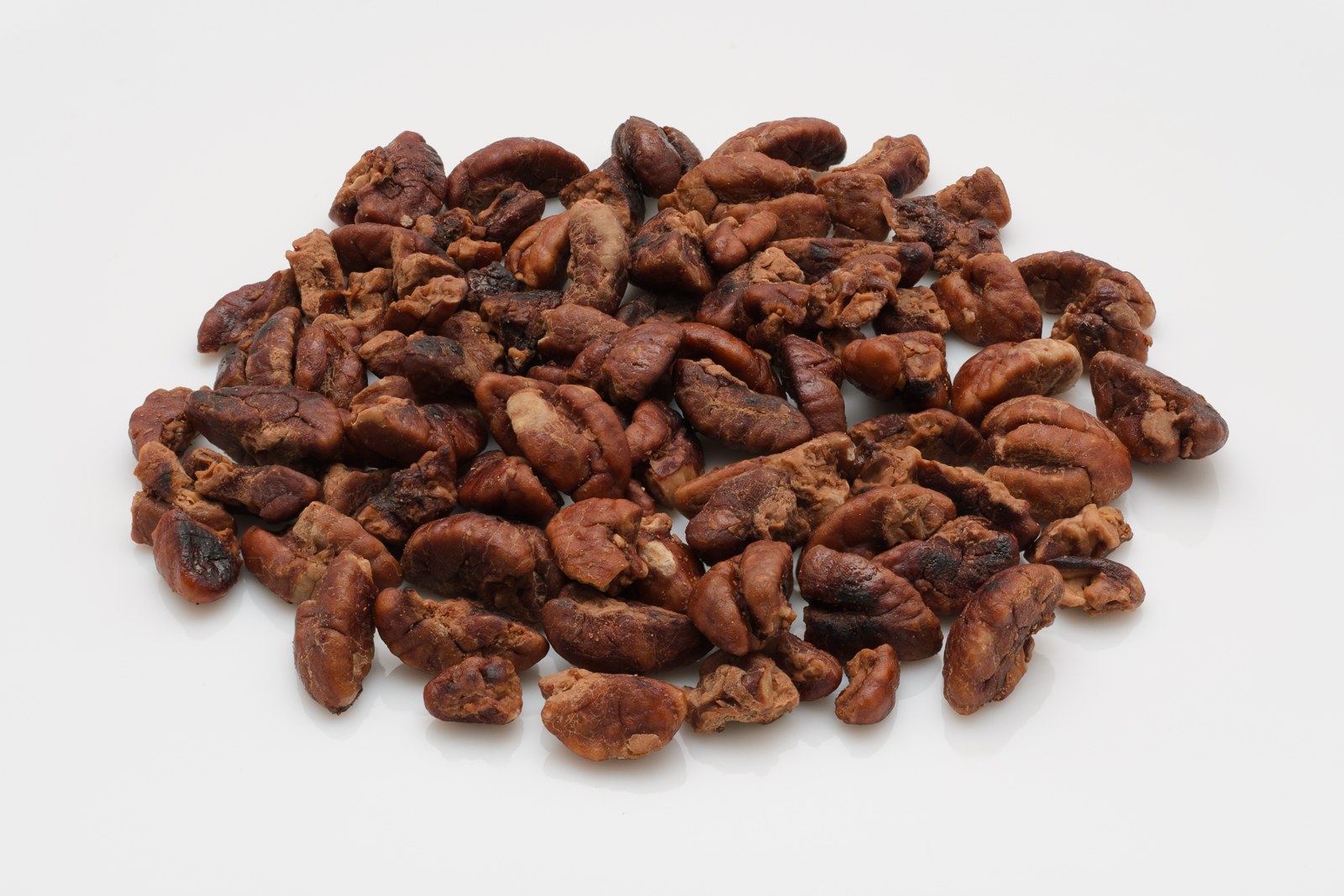
Featured image: Chinese hickory (Carya cathayensis) kernels. Photo: King of Hearts / Wikimedia Commons / CC BY-SA 4.0. Resized for web.
