Pecan and Chinese Hickory Genomes: What the 2019 Study Found
A 2019 study assembled reference genomes for pecan and Chinese hickory, giving researchers tools to investigate how these trees evolved and how their kernels develop.
Which trees did the researchers study?
The paper, The genomes of pecan and Chinese hickory provide insights into Carya evolution and nut nutrition, examined the pecan cultivar Pawnee (Carya illinoinensis) and the Chinese hickory landrace ZAFU-1 (Carya cathayensis). Both belong to the walnut family, Juglandaceae, but they are not the same species as Persian walnut (Juglans regia).

What did sequencing reveal?
The authors assembled the plants' DNA sequences and compared gene families and evolutionary relationships. They also investigated genes associated with traits including stress responses and the production of oils, polyphenols, amino acids and B vitamins. Their comparisons included additional Carya species and walnut relatives.
In practical terms, a reference genome is a map for further research. It helps scientists locate and compare genes rather than starting each investigation without that framework.
Why might this matter for growers?
The researchers presented the genome resources as a foundation for future crop improvement. Investigating genetic variation can help breeding research ask more precise questions about kernel traits and how trees respond to growing conditions.
How does genetics relate to nutrition?
Genes help explain how a tree produces compounds in its developing kernels. A food label answers a different question: how much of each nutrient is present in a stated serving of the finished product. Roasting, seasoning and portion size also matter when comparing snacks.
The study provides a foundation for plant research, not clinical evidence that eating these nuts prevents or treats disease. For a food decision, start with the product's identity, ingredients and nutrition information. See our guide to interpreting Chinese hickory nutrition.
Read the original research
The paper was published in GigaScience in 2019 and is available in full through PubMed Central. Its methods and data sections explain which plants and tissues were studied. The publication date is worth keeping in view when reading its overview of the industry and earlier research.
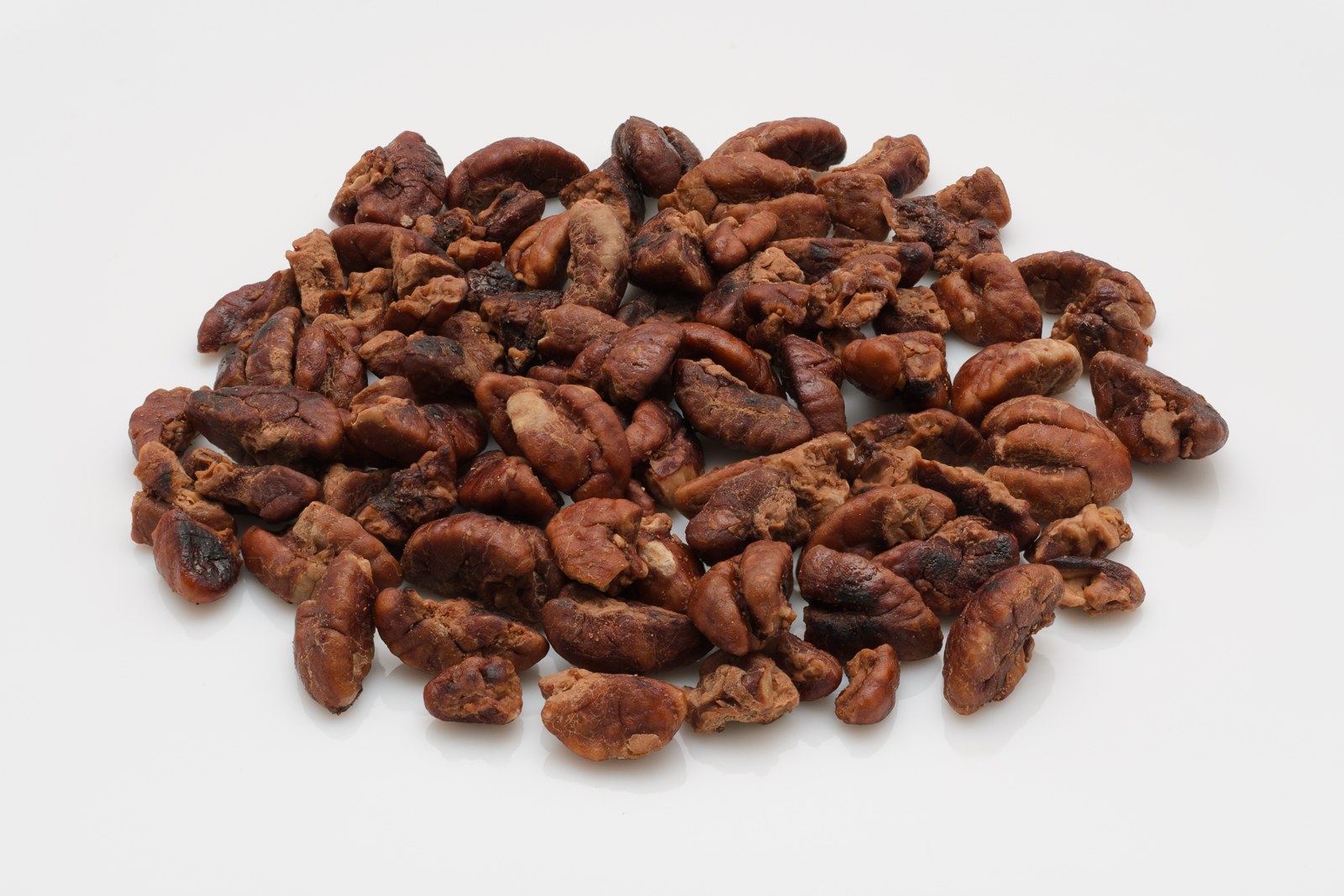
Featured image: Chinese hickory kernels, photographed by King of Hearts / Wikimedia Commons / CC BY-SA 4.0. Resized for web; species illustration, not the study’s ZAFU-1 samples.
