Can Chinese Hickory Grow Outside China? What Gardeners Should Know
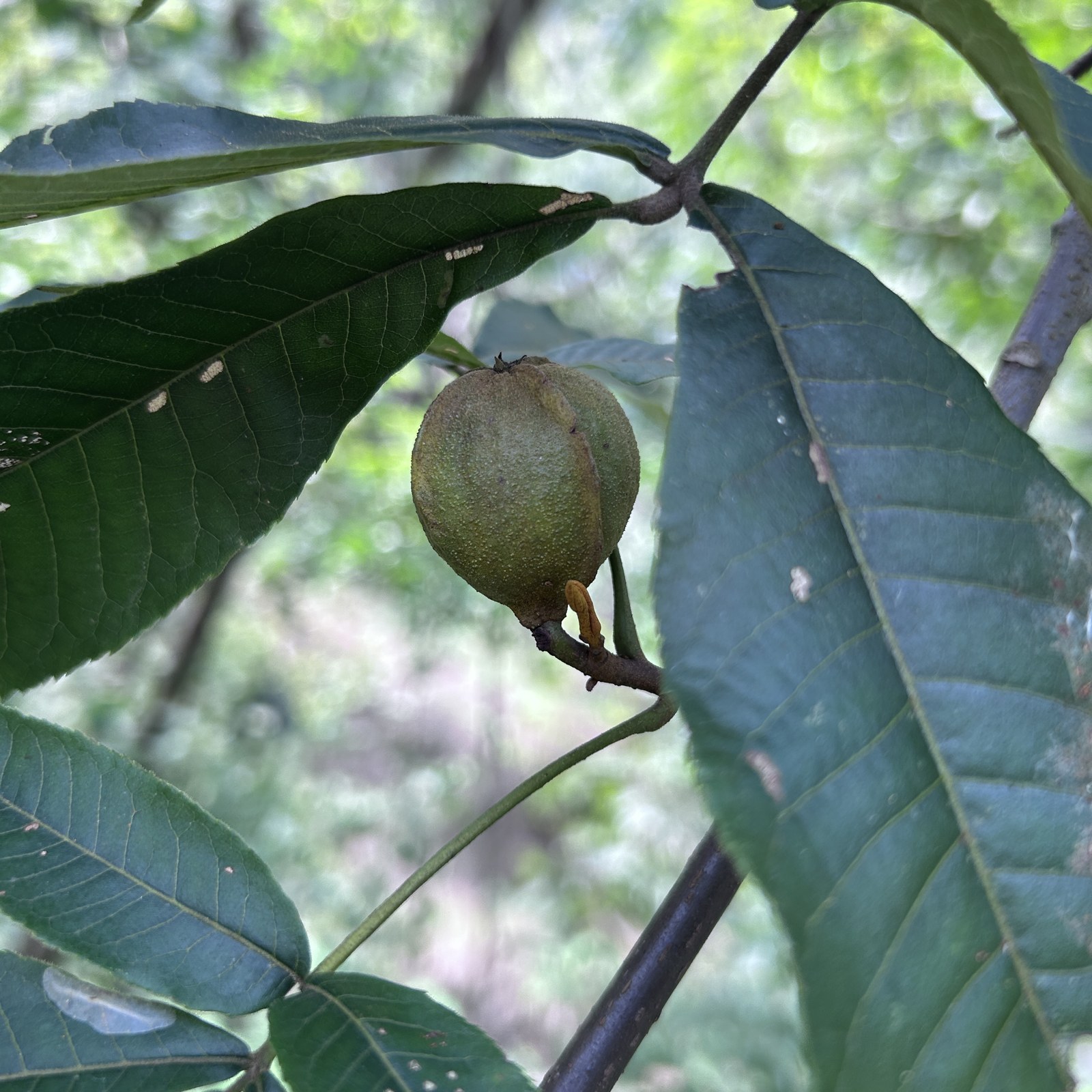
Featured image: Chinese hickory fruit in Lin’an, Zhejiang. Photo: Na Jia, Chengjin Fu, Kai Chen and Jiuqing Liu / CaryaData / CC BY 4.0. Resized for web.
Yes, Chinese hickory trees can grow outside China. Established specimens in British botanical collections show that Carya cathayensis is more than a tree to admire in its native country. For a gardener, however, keeping a tree alive and obtaining a dependable nut crop are separate goals. The evidence supports trying it in suitable conditions, not promising a harvest in every garden.
This guide draws on botanical records, horticultural guidance and published accounts from professional growers. It is not a report of a Great Wall Nuts growing trial.
Start with the right Chinese hickory tree
Look for the scientific name Carya cathayensis. Kew’s Plants of the World Online accepts this species and places its native range in China, from southern Guizhou to Zhejiang. A label that says only “hickory” is not specific enough.
Chinese hickory differs from pecan and the North American hickories commonly covered in English-language gardening guides. Advice for one should not automatically become instructions for another. Our introduction to Chinese hickory nuts explains the food and its Lin’an connection; the question here is whether the living tree suits your site.
What growing at Kew actually tells us
In a firsthand account published in Arnoldia, Spring 2022, page 10, former Kew curator Tony Kirkham described obtaining uncooked Chinese hickory seed during a 2008 visit to Shanghai. After experimental propagation work, Kew’s nursery raised more than twenty plants that were planted around the arboretum. He reported successful trees with straight trunks and well-spaced branches.
That is valuable evidence from a professional collection. It does not establish how every seed source will perform in a different climate, or how reliably a garden tree will bear nuts. The historical seed-collecting story is also not an instruction to bring food nuts or planting material across borders.

Climate, soil and space
The RHS species profile recommends a sunny, sheltered position with deep, humus-rich soil that retains moisture but drains well. Its H4 hardiness rating uses UK growing conditions and a minimum-temperature band of −10 to −5°C. This is not a universal survival threshold or a direct substitute for a USDA zone assessment.
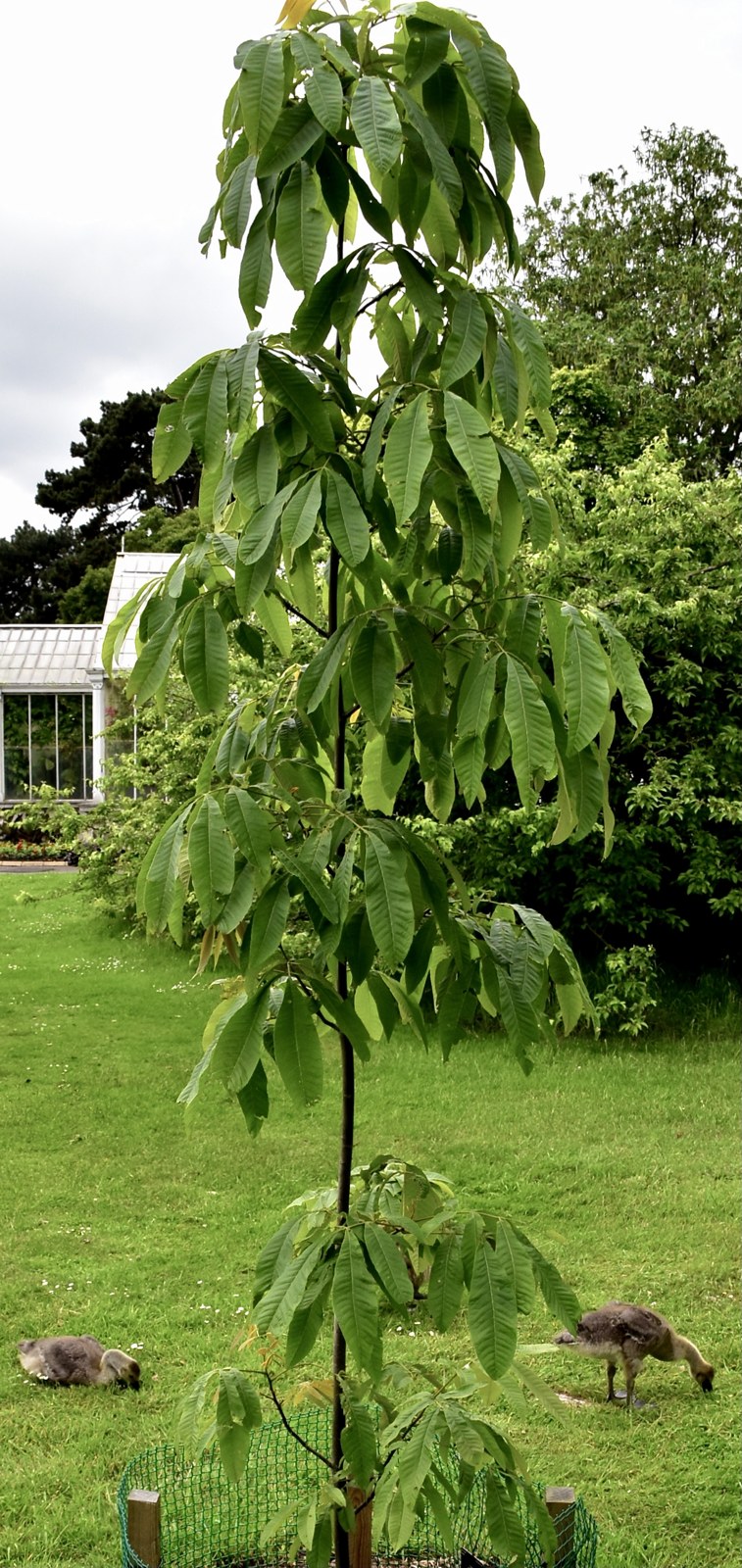
The RHS describes a slow-growing, deciduous tree, with yellow autumn foliage, reaching around 8 metres in its profile while becoming much larger in China. Treat that garden figure as guidance, not a guaranteed height limit.
The International Dendrology Society’s Trees and Shrubs Online account records trees reaching 20 metres in the wild. It also highlights susceptibility of new growth to spring frost and describes long-term hardiness beyond the natural range as an open question. A photograph of a young, slender specimen cannot tell you its eventual space requirement.
Before choosing a planting position, discuss your winter lows, spring frosts, summer conditions and soil drainage with a nursery that knows this species. Ask about actual local specimens, including their age and exposure. Nearby experience is more useful than assuming that a successful tree in London proves suitability for your own garden.
Will it produce nuts?
Do not buy Chinese hickory expecting a quick crop. The RHS cautions that fruiting may take 18–24 years. That is a reported timescale, not a deadline after which your tree is guaranteed to produce nuts.
Ask whether a plant is seed-grown or a named, grafted selection, and what evidence supports any claim about earlier bearing. A supplier should distinguish a tree’s age from its expected time to first fruit. For a crop-focused purchase, also ask about flowering, pollination arrangements and observed yields in a comparable climate. A claim that the tree is hardy does not answer those questions.
If your main aim is dependable home-grown nuts, compare this experimental choice with nut trees already proven locally. If your interest is a botanical specimen, foliage and the chance to observe an unusual species may be worthwhile even without a crop.
Seed, nursery plants and snack packets
For propagation, the RHS states that seed needs cold stratification to overcome dormancy. Obtain a species-specific protocol from the seed supplier rather than guessing a chilling period from instructions for pecans or other hickories.
Roasted retail nuts are food, not viable planting seed. Even a packet described as raw does not establish its suitability for propagation. Prefer a reputable nursery or specialist seed supplier able to explain identity, provenance, freshness and handling. Before ordering from abroad, check the plant-health and import requirements for your destination; this guide does not establish permission to import.
Questions to ask before buying
- Is the plant labelled Carya cathayensis, and is its origin documented?
- Is it a seedling or a grafted selection, and how old is it?
- Has this stock survived and grown well in conditions like mine?
- What space, establishment care and soil conditions does the nursery recommend?
- If nuts are the goal, what local evidence supports the seller’s fruiting and pollination advice?
A Chinese hickory tree can be a rewarding long-term planting where conditions suit it. Start with verified stock and a realistic purpose: growing the species is demonstrably possible outside China, while reliable garden cropping still deserves careful, local evidence.